
Only Orvilles in the Building
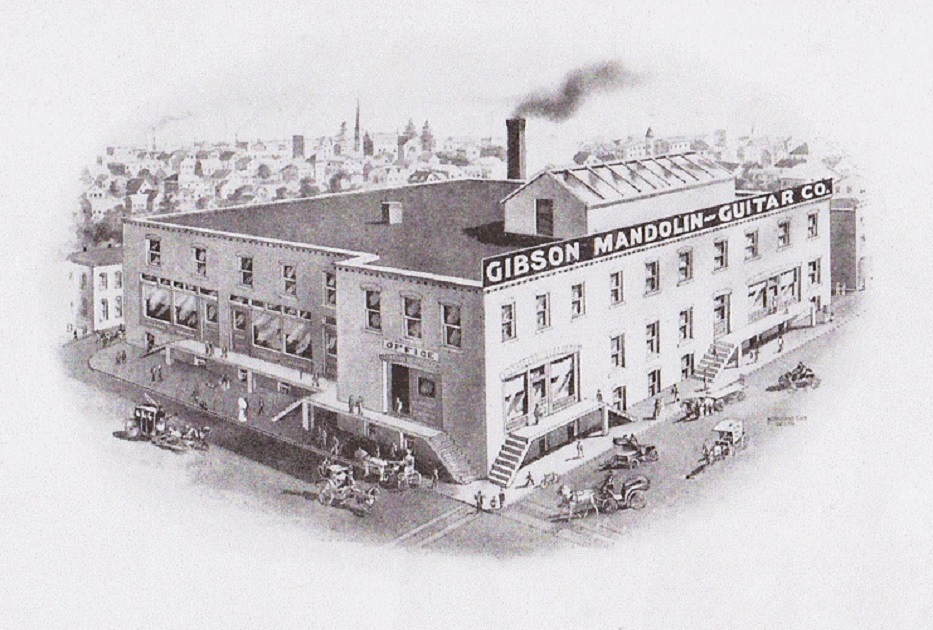
James A. Henrickson, like George Altermatt, came to the Gibson company from Chicago as a true instrument maker. So did his brother-in-law, Hans D. Larson, but we’ll get to him later. His employment began in 1904, listed simply as an instrument maker and later as a woodworker.
One thing about factories, word travels fast. It’s not like all the members of the Monkees living in the same house, but it might as well be. News travels so fast it scorches the grapevine in these places. In and around the Chicago factories, word could’ve easily gotten out about a new instrument company in Michigan, in a town along the Michigan Central Railroad. Easy to get to. All the celery you can eat. There’s fields of it.
Maybe someone has already gone there, James A. Henrickson, for example. Rumors have drifted back. Good wages, lower cost of living. Still have to walk to work, Everybody does. Not as much urban blight, at least on a smaller scale in Kalamazoo. If they’ll hire him, we should be in like Flint. Enough already! That movie hasn’t even been made yet. I’m making this all up as I go. Not really, just this paragraph. But haven’t we all been party to conversations like this?
James Henrickson, Hans Larson and George Altermatt were all instrument makers who moved from Chicago to Kalamazoo and brought their experience with them. Lord knows the five founders didn’t have any. James says it’s OK if I hijack his blog post. Publishers wanted more about the company, well here it is.
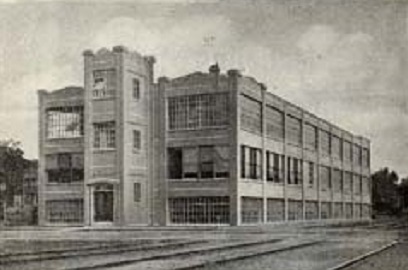
Let’s start with John W. Adams, 43 years old, attorney. John had his hand in just about everything in town. He sat on the board of directors of many businesses and organizations: a paper mill, an insurance company, a retail drug store, the athletic association, a building and loan, etc., etc., etc. Does buying stock and sitting on a board give him direct experience and knowledge to personally set up and run a factory from scratch? After all, he is the President of the new Gibson company. I’ll just be polite here and check the ‘no’ box on that one. Moving on.
Samuel Van Horn, 27 years old, attorney. I’m not going to run Mr. Van Horn through the mill. He changed the juvenile and probate court system in Kalamazoo for the better. His side work was breeding prize winning show dogs. But, again, absolutely no experience setting up and running a factory.
Leroy Hornbeck, 27 years old, attorney and real estate developer. Next to Orville, Leroy was the Gibson company’s most important and valuable employee. Of the original five investors, he is the only one who had even a shred of actual experience that was useful to setting up and running a factory from scratch. Even though his focus was building houses, his knowledge of the real estate market probably gave the company an advantage when scouting out the factory building on Exchange Place, building the factory on Harrison Court and acquiring the land for the Parsons Street building.
Lewis A. Williams, 24 years old, musician and music teacher. He was good to Orville. He could turn Orville’s “Everything except a Gibson is crap” into the prose of a preachers son that could sell their product. But, alas, no experience setting up or running a factory.
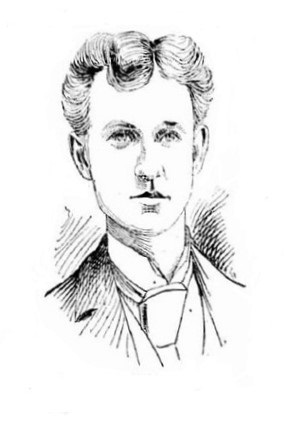
Ulysses Sylvester Reams, 36 years old, musician and retail music store owner. All five investors were not only stockholders, but they also appointed themselves managers. I think Sylvester was given the additional arbitrary title of production manager. Yeah, I wonder how many times Orville told him to fuck off. Did they even say it like that back then?
The biggest business problem Sylvo faced was people putting the sheet music back in the wrong place. Like he knew how to manage a bunch of factory workers. I’ve worked in a factory, they don’t take shit from anybody I’m sure James, Hans, and George had a field day with Sylvo. At least I hope they did.
The decision by the board at the meeting, on April 25, 1903, when they changed Orville’s pay from salaried to hourly, had absolutely nothing to do with Orville and everything to do with the board’s desperation to save their failing company. They didn’t sell the amount of stock they had hoped before starting business. That includes an additional 100 shares bought and split between the five. By mid 1903, they had only 20 additional stockholders and less that $400 in the till.
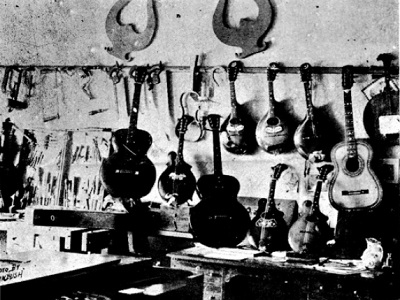
Orville was the only one who knew what the fuck he was doing. He’s the only one who was producing a quality saleable product. He knew exactly what he needed to do his work. He knew where to find raw materials and what to do with them when he got them. He brought tools with him. The only tools in the vast empty factory building that was Exchange Place.
At this point in 1903, he has nearly 20 years experience as a successful luthier getting top dollar for his work and is the creator and owner of THE patent. Wait, how much experience does the board have collectively…oh, that’s right, none. In the ‘experience, skill and knowledge’ box for Orville, I’m checking ‘fuck, yeah.’
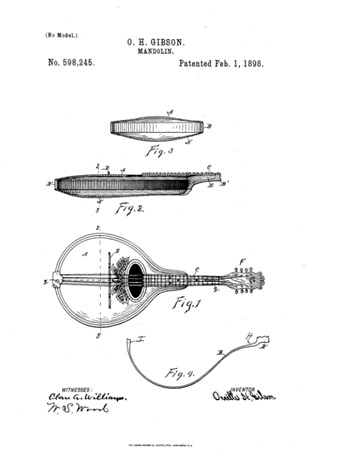
And Orville is the only one that can teach new employees to be Gibson luthiers. Period. If he isn’t teaching them, the company is up shit creek. There is no other choice for vocational training at this point. What, you think Sylvo, the production manager, can do it? Did ya really? Not a chance in hell. Not to mention, catalog B, that came out in February, is full of Orville made instruments. Their complete product line and business health rests on Orville’s shoulders. Piss him off and I’m sure production slowed to a snails pace. At this point, he’s also the only one who has nothing whatsoever to lose if the company goes under.
.
This reminds me of when my dad passed away. I was talking with brother #1, when a line from the movie “City Slickers” came to mind. “Lord, we give you Virgil. Try not to piss him off.” We couldn’t stop laughing. And for those of you wondering, I’m listening to the album “Surfs Up” right now. I think Carl did a good job on his interpretation of the song. It’s keeping me as grounded as can be expected at the moment.
 A Biography of Orville H. Gibson